
Tools You Can Use to Monitor Your Health
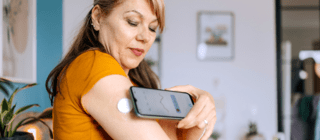
Technology can help people live their lives better. Let’s look at some common tools for monitoring health at home and discuss how you may benefit from using this technology in your home.
Technology that seemed like science fiction a few years ago is now helping people live their lives better. For example, real-time language translation has gone from a far-out Star Trek concept to an actual tool that people are using on their phones and computers to instantly translate words from one language to another, eliminating communication barriers.
Medical devices are part of the trend of using smartphone apps and other low-cost technology to improve lives. Blood pressure, glucose, oxygen saturation, heart activity, and other important medical information can now be monitored by patients from their homes using affordable devices. People can choose to share data with health care providers, allowing them to see how their patients are doing without requiring a trip to the clinic or hospital.
Let’s look at some common tools for monitoring health at home and discuss how you may benefit from using this technology in your home.
Blood Pressure Monitors
Automated cuffs that read blood pressure are available at pharmacies and other retailers for less than $50. The technology has been around for decades, but recently it has become much more compact and mobile, allowing users to monitor their blood pressure on the go.
Some models have cuffs that go around the wrist instead of the upper arm. They monitor blood pressure and heart rate at the wrist’s radial artery, displaying readings on a small digital screen built into the cuff. They can also send data to a phone app via Bluetooth, allowing users to keep a log and track trends over time. A report generated from the app can be emailed to a health care provider.
Even smaller are smartwatches that use optical sensors to estimate the wearer’s blood pressure. The advantage of smartwatches and wrist cuffs is their portability. They are ideal for people who travel and don’t want to carry around a bulkier traditional upper-arm style monitor.
Wrist cuffs and smartwatches are appealing, but their accuracy has been called into question.
The brachial artery in the upper arm is bigger and deeper beneath the skin, offering a stronger pulse signal. Wrist arteries are smaller and closer to the surface, which tends to exaggerate blood pressure readings. Wrist monitors are also more sensitive to the way the arm is positioned and may give inaccurate readings.
The American Heart Association recommends upper-arm cuffs because they provide more consistent data. Upper-arm cuffs have accuracy rates up to 90%, studies have shown, while the accuracy of wrist-cuff monitors is as low as 40% to 50%.
The American Heart Association recommends against using smartwatches with optical sensors to manage hypertension. Some smartwatches have tiny built-in inflatable cuffs for measuring blood pressure, and these tend to be more accurate than models that rely on optical sensors. However, they are still prone to the same issues of monitoring blood pressure at the wrist and are sensitive to wrist placement. If the watch is not placed correctly, the blood pressure readings will be distorted.
If you have high blood pressure, what should you do? Absolutely get a traditional upper-arm style home monitor clinically proven to give accurate readings. It will enable you to keep track of your blood pressure between visits to your health care provider. After purchasing a home blood pressure monitor, take it with you on the next visit to your provider’s office. By taking a reading with your home monitor while in the office and comparing it to the blood pressure reading taken by a medical professional, you’ll be able to verify your home monitor’s accuracy.
If you travel and can’t take the upper-arm cuff, you may want to also purchase a more compact inflatable wrist cuff for readings while away from home. Be sure to learn how to use the wrist cuff correctly to avoid false readings. Smartwatches are great for taking quick readings and looking at lifestyle trends, but they shouldn’t be relied upon or replace upper-arm cuffs.
Continuous Glucose Monitors
For people with diabetes, the development of continuous glucose monitors (CGMs) has been a breakthrough in managing their condition. The CGM is applied to the user’s stomach or arm. A tiny sensor goes into the skin to monitor glucose levels in the interstitial fluid between cells. The CGM unit transmits glucose data to a smartphone app or a dedicated reader.
Previously, people with diabetes had to draw a drop of blood with a fingerstick and use a blood sugar monitor to determine their glucose level. The CGM allows them to see their glucose level at any time without doing a fingerstick. The CGM provides more rapid feedback on glucose levels to ensure they are taking the right amount of insulin. Users can also receive alerts from the CGM if their blood sugar is rapidly rising or falling, helping them better control diabetes symptoms.
Data from the CGM can be shared with health care providers, helping them see how well diabetes medications are working.
CGM sensors have to be replaced about every two weeks. While CGMs have reduced the need for fingersticks, people with diabetes should still occasionally do fingerstick testing to verify that the CGM is giving accurate readings. CGMs have been shown to be very reliable, being within 15% of true glucose levels at least 95% of the time.
If you have diabetes, a CGM will enable you to quickly see how food, exercise, and stress are affecting your body. Real-time feedback from the CGM can help you avoid blood sugar crashes or spikes and better control the disease.
Pulse Oximeters
You are probably familiar with a pulse oximeter, the thing they put on your finger at the doctor’s office or hospital to determine your pulse rate and blood oxygen saturation level. These devices are also available for consumers to use at home. Fingertip pulse oximeters can be purchased at pharmacies and online for less than $20, though feature-packed versions are priced at more than $100.
Should you buy a pulse oximeter to use at home? If you are generally healthy, it probably won’t be very useful. However, if you have a chronic condition such as lung or heart disease, or are recovering from a respiratory illness, having a pulse oximeter at home can be helpful.
For people with chronic obstructive pulmonary disease (COPD), asthma, pulmonary fibrosis, or cystic fibrosis, a pulse oximeter can provide oxygen saturation readings that they can track to better manage their disease. People with heart failure or cardiovascular disease can use a pulse oximeter to check oxygen delivery to their blood. Recorded data can be shared with health care providers.
If you have sleep apnea, a pulse oximeter can track drops in oxygen levels caused by pauses in breathing. It can also track increases in heart rates that happen when oxygen levels drop. Models are available that are worn like a ring, which are less likely to fall off the finger overnight. They sync to a smartphone app via Bluetooth, continuously recording data as the wearer sleeps.
Digital Scales
A new generation of smart bathroom scales has burst on the market that not only tells the user their weight but measures many other data points. Smart scales can instantly calculate your body mass index (BMI) and body fat percentage. Some models can also estimate:
- Muscle mass
- Bone mass
- Body water percentage
- Visceral fat (the fat that surrounds abdominal organs)
- Basal metabolic rate (calories burned at rest)
- Metabolic age
- Body protein percentage
- Standing heart rate
Weight and other data can be sent to a smartphone app via Bluetooth or Wi-Fi, allowing the user to track data and see it displayed in graph form.
While most digital scales are very accurate for measuring weight, other metrics like body fat percentage are only estimates. For body fat measurement, the smart scale sends a weak electrical current through the body (the user must stand on the scale barefoot for it to work) and then calculates body fat based on electrical resistance and demographics like age and height. The body fat reading, however, can be thrown off by factors like hydration levels, skin moisture on the feet, and recent exercise.
Having a bathroom scale is useful for many people, as knowing how much they weigh helps with health management. Should you invest in a smart scale that does much more? If you are trying to lose weight or achieve other fitness goals, a smart scale can be helpful as it allows you to track progress over time. Having data like body fat percentage at your fingertips can keep you engaged and motivated, but it shouldn’t be relied upon for health management. If you aren’t actively trying to lose weight, a traditional bathroom scale may be all you need.
Portable ECGs
Fans of television medical shows know what an electrocardiogram (ECG) is—it’s the device that’s hooked up to a patient to monitor heart rate and rhythm, and to determine if there has been damage from a heart attack. Portable ECG devices are now available to consumers to use at home, costing less than $100 for basic models.
Different models work in various ways to measure heart activity. Some simply require the user to hold metal pads for a brief time, while others rely on patches that must be adhered to the user’s chest. Smartwatches take readings from sensors built into the watch that contact the wearer’s wrist. Most models send data to smartphone apps, showing users if their heart activity is normal or is exhibiting signs of problems like atrial fibrillation (AFib).
Are portable ECGs important to have or overkill? Healthy people with no heart problems or symptoms probably won’t benefit from a portable ECG. They can even be detrimental for a healthy person, as false positives can trigger anxiety and panic attacks.
People with known heart issues like AFib can benefit from having a portable ECG in their home. The devices can help them track how well treatments are working, and can detect abnormal heart rhythms early, giving the user time to respond and prevent a severe medical emergency.
Choose Tech Wisely
There has been a recent surge in health technology that can be used at home or worn on the go. Devices have gone beyond gathering basic health data like blood pressure and weight to advanced metrics like heart rate variability and ECG rhythms.
Access to large amounts of data from home monitoring devices can be overwhelming for consumers. The problem of health information overload may get even worse as devices continue to become more sophisticated and incorporate additional insights from artificial intelligence models.
The best approach for consumers is to carefully consider what health data would be personally most helpful to them, and choose the technological tools that will produce reliable data they and their health care providers can use to monitor and improve their health.