
Preventing Falls During Winter
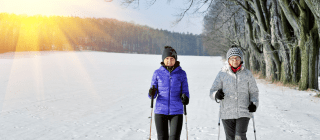
Learn tips for how to stay safe from falls this winter.
Ice and snow in a Vermont winter can bring us to our knees or put us flat on our back if we slip and fall while outside. Not only is falling painful, it can result in major damage to your body.
Injuries from falls include sprains, torn ligaments, and fractures like a broken hip, wrist, or ankle. Head injuries such as traumatic brain injury are also possible. Falls are a leading reason for emergency department visits in Vermont, amounting to one-third of injury-related visits.
Falling can also be fatal, especially for older people. With our large elderly population, Vermont has a high number of deaths from falls. A recent study found that Vermont ranks second in the country for fatal falls, with a rate of 27.8 per 100,000 residents, compared to the national rate of 15.7 per 100,000. On average, 178 Vermonters die each year from falls.
To help keep you or a family member from falling this winter, we take a deep dive into how to prevent falls outside your home.
Tips for Fighting Ice
Milder winters here in Vermont have increased the problem of ice accumulating on steps, walkways, and driveways. Ice can form when rain or sleet falls and then freezes. Snow already on the ground can become ice if the air temperature warms above the freezing point during the day; the snow melts and then refreezes into ice at night. Both scenarios are occurring more often in Vermont, as we’re experiencing more winter days with temperatures above freezing and an increasing freeze-thaw-freeze pattern.
You can fight ice and decrease your risk of falling on it by using an ice-melting chemical. However, deicers are not all the same. Some work better in colder temperatures than others. Many are corrosive, potentially damaging metal and concrete. Certain chemicals can also be harmful to pets and plants. Here’s a table that compares the properties of common ice-melting chemicals.
| Chemical | Lowest Effective Temperature | Corrosion | Pet-Friendly | Notes |
| Sodium Chloride (Rock Salt) | 20°F | High | No | Low cost but can hurt pets’ paws and cause significant damage to surfaces and plants. |
| Calcium Chloride | -25°F | High | No | Works well in very cold temperatures and melts ice quickly. Can burn pets’ paws and is toxic if they ingest it. |
| Magnesium Chloride | -13°F | Moderate | Yes | Melts ice more slowly than calcium chloride but is less corrosive and better for use around pets. |
| Potassium Chloride | 20°F | Moderate | No | Less damaging to plants but more expensive. |
| Calcium Magnesium Acetate (CMA) | 15°F | Low | Yes | Safer for concrete and use around pets and plants. Very expensive. |
When you are selecting or using an ice-melting chemical, here are some things to consider:
- Even deicers that are deemed pet-friendly can cause gastrointestinal upset when pets lick it off their paws. Wipe your pets’ feet with a damp cloth after they’ve walked on surfaces treated with any deicer.
- Many deicer products on the market are a blend of chemicals, so be sure to read the label to see which chemicals the product contains before purchasing.
- Store deicer in a tightly sealed container so it isn’t exposed to moisture, which helps prevent clumping.
- Keep a container of deicer near your door so you can easily spread it on your steps before using them. As the ice melts, scrape off any slush or water so that it doesn’t refreeze later.
- Avoid tracking deicer into your house by using an outdoor mat to scrape it off boots before entering the home. Sweep up any excess deicer to reduce tracking.
Sand can also help prevent winter falls. Spreading it over ice adds grit that provides traction, giving your boots something grip onto. Sand will absorb some of the sun’s heat and assist in melting ice, although much more slowly than deicer chemicals. It’s inexpensive and bags of it are readily available at hardware stores.
The main drawbacks of sand are that it can absorb moisture while in storage, causing it to freeze in cold weather, and it can be messy. Mix sand in a container with rock salt to prevent freezing. Wipe boots on an outdoor mat to reduce tracking sand indoors and be sure to clean sand off pets’ paws.
If you would rather not spread sand or deicer chemicals, an option to consider is a set of electric snow-melting mats, which have heating elements in them to melt snow and ice from your steps and walkway. These work best as a preventive measure, turning them on when snow or freezing rain is forecast. You can find these mats online or through home improvement stores.
Tips For Winter Walking
Walking on ice and snow is a necessity in a cold climate like Vermont, where it’s difficult to keep pathways clear all the time. Here are some tips for safely traversing slippery surfaces.
- Wear boots with deep treads. Choose winter footwear that has an aggressive tread pattern designed to grip surfaces. Avoid shoes with smooth soles. Some winter boots have integrated metal studs to provide better traction on ice.
- Add slip-on ice cleats. When conditions are slick, you can add grippers to the bottoms of your boots. Sporting goods stores sell slip-on cleats that go over boots’ soles. These can be difficult to put on if they are too tight, so you should try them on your boots before purchasing to ensure you’ve selected the correct size.
- Test before stepping. If you are unsure if an area is icy or slippery, test it first by gently putting one foot on it and see if it slides easily. Be sure to keep most of your weight on the other foot while doing this test. When getting out of a vehicle, test by putting one foot on the ground and see if it slides before lifting your weight off the seat. Holding onto a vehicle’s open door for support can help you exit safely when it’s slippery. Ice can be difficult to see, so doing this test before stepping helps you identify places where extra caution is needed. If you can, go around an icy spot by walking on snow (which has better traction than ice).
- Take penguin steps. Instead of your usual stride, walk like a penguin on icy surfaces. Take short, flat-footed steps, keeping your weight centered directly over your feet. This increases boot contact with the ground. Pointing your feet out slightly also helps widen your base of support. Holding your arms out to your sides while walking improves your balance. Watch a short video that demonstrates how to do the “penguin walk.”
- Watch your path. Keep your gaze focused downward and a few feet ahead so you can see ice or slippery patches before you actually step on them. Don’t look at your phone or other distractions. At night, turn on outdoor lights to increase visibility.
- Keep your hands free. Not carrying items helps you use your arms to balance yourself, and if you start to slip, you can catch yourself by grabbing something nearby. If you must carry items, put them in a backpack to keep the weight centered on your body and your hands free.
- Use handrails. When going up or down steps, be sure to always have at least one hand on a handrail. If your steps don’t have handrails, add them as soon as possible.
Slow Down in Winter
Vermonters know the importance of slowing down when driving in slick conditions. The same is true for walking on slippery ground. Walking slowly helps you maintain control and significantly reduces the chances of falling. It’s better to take a few extra minutes than to risk seriously hurting yourself. Check out our other tips for preventing winter injuries.